
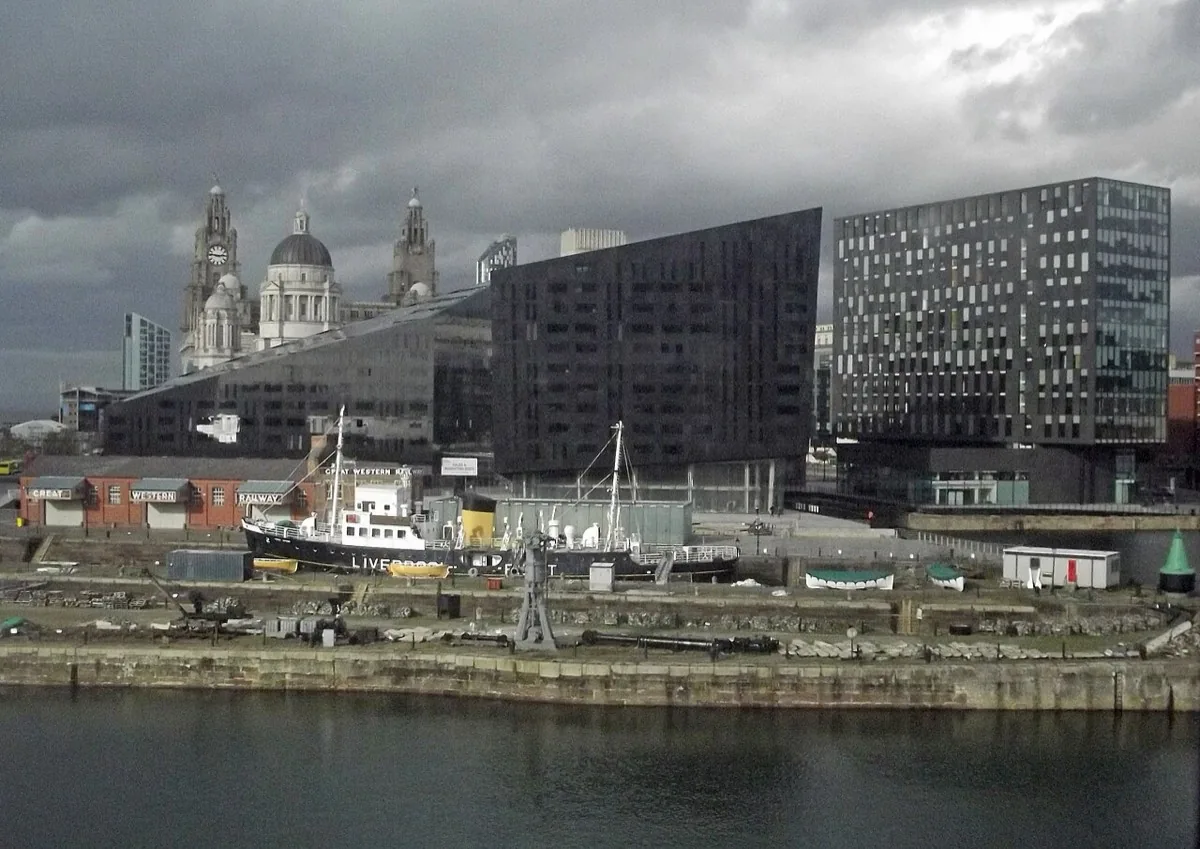
Liverpool skyline — photo by Elliott Brown, via Wikimedia Commons (CC BY-SA 2.0).
Liverpool regularly tops UK rental-yield rankings, and the reason isn't luck — it's an average price around £185k (well below the UK average) sitting alongside genuine, funded regeneration and a region Savills forecasts to lead the whole country for house-price growth. Here's the full case, area by area.
The investment case in one paragraph
Liverpool pairs some of the highest rental yields of any major UK city (5–8%+ gross, with top postcodes higher still) with real capital-growth momentum behind it — Savills forecasts the North West to lead every UK region for house-price growth through 2029/30, at +25–31%, and Liverpool's affordability gives it the most runway within that region. Behind the numbers sits £5.5bn of waterfront regeneration, a new Freeport, and a genuinely diversifying economy moving beyond its traditional retail and logistics base into life sciences and digital. As with every city we cover, we look at four things before recommending it: government investment, education, transport and corporate presence — Liverpool scores well across all four, provided you know which streets to target.
Government & major investment — a £5.5bn docklands transformation
Liverpool's regeneration is happening at a scale rarely seen outside London, concentrated along the waterfront and in two purpose-built innovation districts:
- Liverpool Waters (£5.5bn) — a 30-year, 60-hectare transformation of the northern docks, now anchored by Everton FC's new stadium at Bramley-Moore Dock.
- Knowledge Quarter / Paddington Village (£1bn+) — a life-sciences and health cluster, home to facilities like CELT and HEMISPHERE labs, targeting around 8,000 jobs.
- KQ Liverpool Life Sciences Zone (£160m) — a government-backed investment zone specifically supercharging the health and life-sciences cluster.
- Liverpool2 / Freeport (£400m+) — a deep-water container terminal at the Port of Liverpool capable of handling the world's largest container ships, now fully operational and generating an estimated £850m of GVA and around 14,000 jobs.
- Ten Streets (£500m) — a creative-industries district in the eastern docklands, targeting 2,500+ jobs long-term.
- Baltic Triangle (£128m+) — the established digital and creative quarter just south of the centre, named among the UK's coolest places to live and home to a genuine, growing cluster of tech and games companies.
The Knowledge Quarter investment in particular is worth watching closely as an investor — life-sciences clusters tend to bring long-term, well-paid employment that outlasts a single regeneration cycle, which is a different (and often more durable) demand driver than retail or leisure-led regeneration.
Education — a deep, resilient student base
Around 57,000 students study across Liverpool's two largest universities. The University of Liverpool is a Russell Group institution with a genuine research reputation, and alongside Liverpool John Moores it anchors a large, renewing tenant base concentrated in the L1–L8 postcodes closest to the two campuses. That student demand is reinforced by a fast-growing airport (John Lennon Airport handled 5.1 million passengers in 2024) and world-famous tourism, which between them support a much broader rental market than students alone.
Transport & connectivity — Merseyrail, fast links and a Freeport
Liverpool runs on the electrified Merseyrail network — a genuine metro-standard system that keeps the city well connected without needing a car, which matters directly for rental demand near stations. National links are strong too: Manchester in around an hour, London Euston in about 2h 30m. The Freeport and deep-water port give Liverpool a second, less obvious transport advantage most UK cities don't have — direct access for the world's largest container ships — while the M62, M57 and M58 motorway network ties the city into the wider North West economy.
Corporate presence — a £33bn economy, diversifying beyond retail and logistics
Liverpool's city-region economy generates around £33bn of output, historically anchored by retail, logistics and the port, but increasingly diversifying into life sciences and digital. Real, named employers with a significant Liverpool presence include Home Bargains (headquartered in the region and one of Merseyside's largest single employers), The Very Group and Matalan (retail), Unilever (a major advanced manufacturing centre at nearby Port Sunlight), Princes (food manufacturing), Peel Ports (the port and maritime logistics operator behind the Freeport), Liverpool University Hospitals NHS Trust (healthcare, one of the region's largest employers), and a growing Baltic Triangle digital and games cluster including studios like Lucid Games.
That mix matters for a landlord: retail and logistics HQ jobs, NHS employment, port and manufacturing roles, and a genuinely growing digital/creative scene together give Liverpool a broader, more resilient tenant base than a city dependent on one or two sectors.
Where to look
Central postcodes (L1–L8) vary enormously street to street in Liverpool — more than in most UK cities — so local knowledge genuinely matters here. Student-heavy areas close to the two universities suit HMOs well; the city centre and waterfront, benefiting directly from the Liverpool Waters investment, suit buy-to-let aimed at young professionals and visitors.
The real numbers — and where the risk sits
Liverpool can show some of the highest headline yields in the UK — parts of the city advertise 7–10%+ gross — but the gap between a good street and a poor one, and between gross and net, is wider here than almost anywhere else in the country. The net figure, after realistic void allowance and management costs, is what actually matters, not the headline number in the listing.
Try our yield calculator to model a specific Liverpool property net of costs, or use Rate My Deal if you've already found one and want an honest read before you commit.
How we help in Liverpool
We read the area block by block, verify real tenant demand rather than trusting a headline yield, and stress-test every deal net of costs — so a high advertised number doesn't hide a weak street. See the full Liverpool investment case, including the complete regeneration pipeline and connectivity data, on our dedicated city page.
Yield and growth figures here are broad, indicative and change with the market and the specific property — always model the actual numbers on the property you're considering before you buy.
Thinking about Liverpool?
Tell us your budget and strategy and we’ll source Liverpool deals that stack up — and run the real numbers before you commit.
Make an enquiry